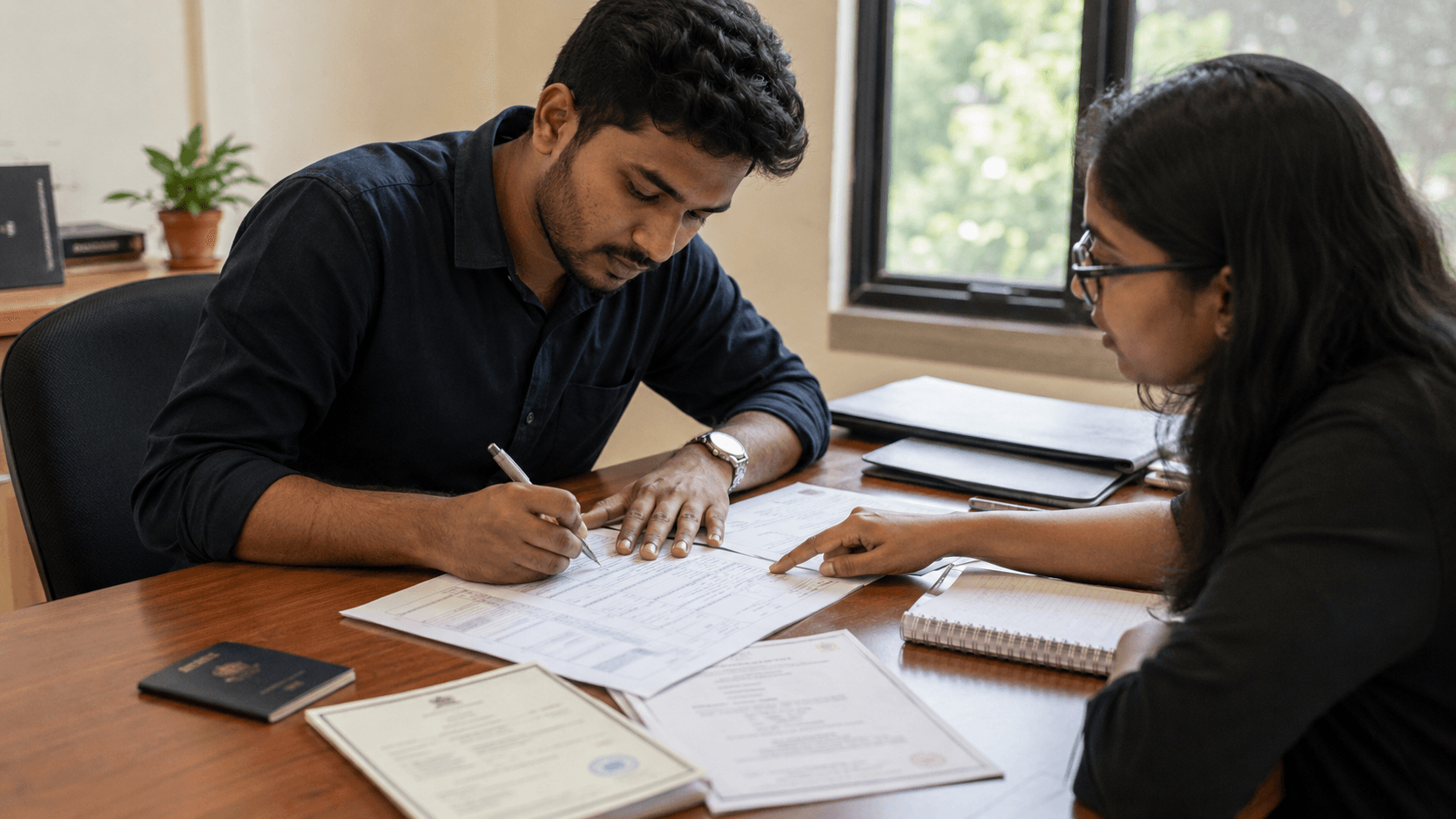
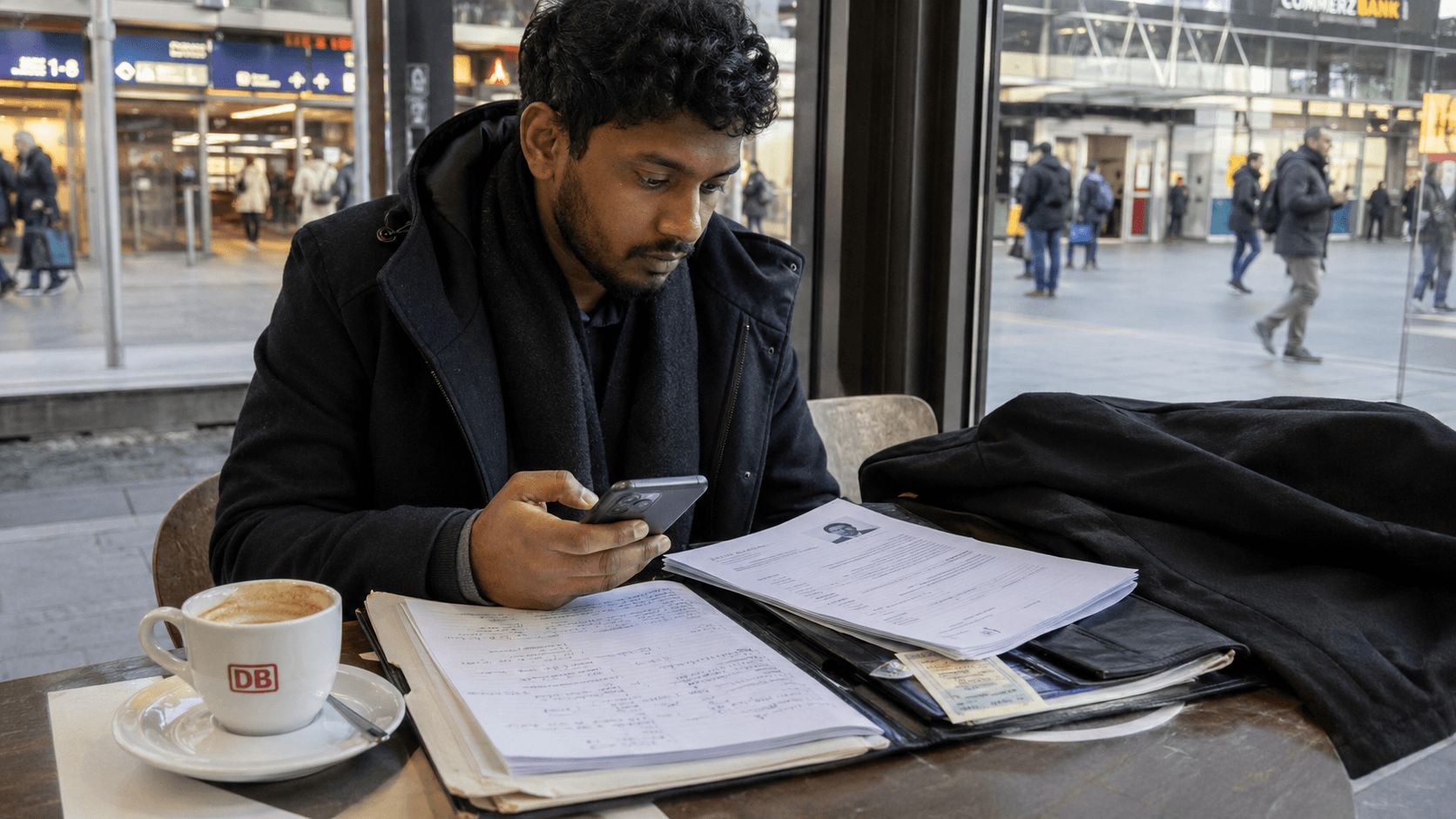
A single missing apostille delayed one of our candidates by four months, not because the document was unavailable, but because they did not know it needed to be apostilled. That four-month delay cost them their training start date.
Document errors are the most common and most avoidable reason for German visa application delays and refusals from Sri Lanka. The German Embassy Colombo has specific requirements for how each document must be prepared, certified, and presented. Embassy appointment slots in Colombo are limited: waiting times of three to six months for a rebooked appointment are normal. One document error can push your Germany arrival date back by half a year. (Source: German Embassy Colombo, colombo.diplo.de, 2024)
This guide gives you a complete document preparation checklist for the main German visa categories available to Sri Lankan candidates, explains exactly what apostille and certified translation mean, and tells you where in Sri Lanka to obtain each.
Why Document Preparation Is the Most Critical Step in Your Visa Application
The German Embassy does not accept incomplete applications. If a required document is missing, incorrectly certified, or submitted in a format that does not meet requirements, your application is put on hold until the correct version is received. In some cases, the appointment is cancelled and you must rebook.
Embassy appointment slots in Colombo are limited. Waiting times of three to six months for a new appointment are normal. One document error can push your Germany arrival date back by half a year.
The antidote is preparation. Most documents require a lead time of two to eight weeks to obtain, certify, and translate. Starting this process early, with a clear checklist, means your documents are ready when your appointment slot opens.
Documents Required for All German Visa Categories
The following documents are required regardless of which visa type you are applying for. Prepare these first, as they take the longest to obtain or certify.
- Valid passport: Must be valid for at least six months beyond your intended stay. All previous passports must also be submitted if you have held multiple passports.
- Completed visa application form: The official form is available on the German Embassy Colombo website. It must be completed in full, printed, and signed. Do not leave fields blank.
- Biometric passport photographs: Two recent photographs meeting the German Embassy biometric specification. Standard Sri Lankan studio photographs often do not meet these specifications. Check the exact requirements before printing.
- Birth certificate with apostille: Your original Sri Lankan birth certificate must be apostilled by the Ministry of Foreign Affairs in Colombo. Under the Hague Apostille Convention, to which both Sri Lanka and Germany are signatories, this apostille makes your document officially recognised in Germany. Processing typically takes five to ten working days. (Source: Hague Convention on Apostille; Sri Lanka Ministry of Foreign Affairs, 2024)
- Certified German translation of birth certificate: Any document not in German or English must be accompanied by a certified translation produced by a sworn translator (vereidigter Übersetzer), meaning one recognised by a German court or authority. Self-translations and standard agency translations are not accepted by the German Embassy. (Source: German Embassy documentation requirements, 2024)
- Police clearance certificate: A recent certificate from the Sri Lanka Police with apostille from the Ministry of Foreign Affairs. "Recent" typically means issued within three months of your visa appointment date, not your application booking date. Allow two to four weeks to obtain and apostille this document.
- Proof of financial means or sponsorship: Evidence that your stay will be financially supported. The exact requirement varies by visa type.
Additional Documents for the Ausbildung Visa
The Ausbildung visa requires evidence that you have a confirmed training place in Germany. In addition to the universal documents above, prepare the following.
- Signed Ausbildungsvertrag (training contract): The original contract signed by both you and the German training company, confirming the profession, start date, training duration, and training salary.
- Confirmation of school leaving qualification: Your O-Level or A-Level certificates with official Sinhala or Tamil to German translation if the certificates are not in English. English-language certificates also require certified German translation in most cases.
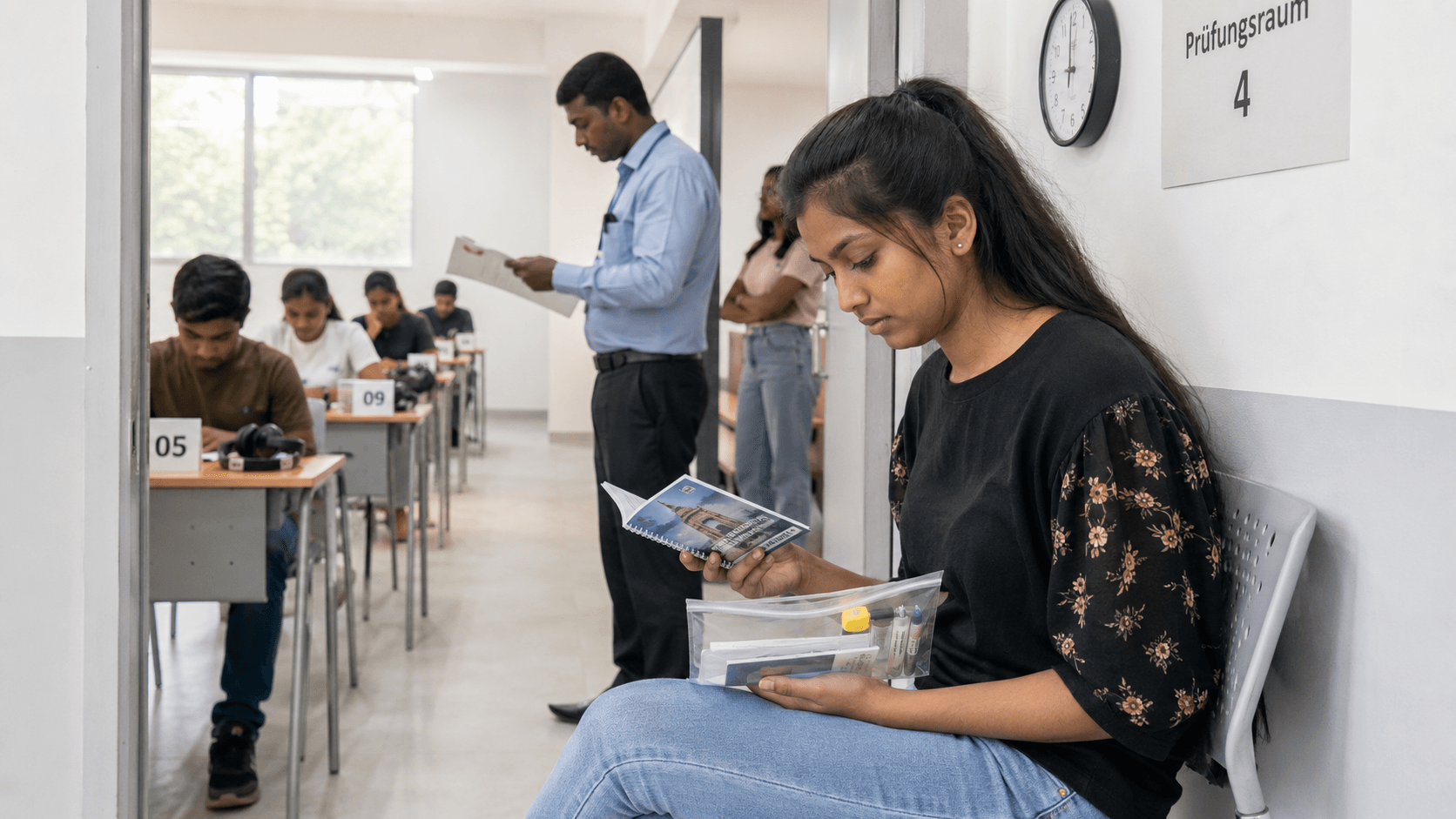
- German language certificate: Minimum B1, ideally B2. The Goethe Institut certificate is universally accepted. Submit the original certificate, not a copy.
- Proof of accommodation in Germany: A letter or rental agreement confirming where you will live during training. Your training company may assist with this.
- Proof of health insurance coverage for Germany: You must hold or arrange German statutory health insurance (gesetzliche Krankenversicherung) from the date of your arrival.
What Apostille Means and Where to Get It in Sri Lanka
An apostille is an international certification that verifies the authenticity of a document for use in another country. Sri Lanka and Germany are both signatories to the Hague Convention on Apostille, which means Sri Lankan documents can be apostilled for legal acceptance in Germany. (Source: Hague Convention on Apostille, 1961; applicable in Sri Lanka)
In Sri Lanka, the sole authority that issues apostilles is the Ministry of Foreign Affairs, located in Colombo. Submit your original document with the application form and the applicable fee. Processing typically takes five to ten working days, though this can extend to two to three weeks during peak periods.
Documents that require apostille for a German visa from Sri Lanka include: birth certificate, marriage certificate (if applicable), educational certificates, and police clearance certificate. Some documents may also require notarisation before apostille; the sequence matters and reversing it will require starting over. MALIROSA advises candidates on the correct processing sequence for each document type.
A Realistic Document Preparation Timeline
Plan your document preparation backwards from your target embassy appointment date. The following timeline assumes you are starting from scratch with no documents prepared.
- Week 1 to 2: Order birth certificate, police clearance, and educational certificates from the relevant issuing authorities. Request official translations of any documents not in English.
- Week 2 to 4: Submit documents for apostille at the Ministry of Foreign Affairs. Submit educational certificates for certified German translation simultaneously.
- Week 3 to 5: Collect apostilled documents. Verify that all details are correct. Discrepancies in name spelling between documents are a common problem that must be resolved before submission.
- Week 5 to 6: Compile the complete application package. Review against the embassy checklist. Photograph the complete package for your records.
- Week 6 onwards: Submit your visa application or attend your pre-arranged embassy appointment. Continue German language study throughout this period.
Visa decisions are made exclusively by the German Embassy or the responsible German authority. MALIROSA supports preparation, documentation, and application strategy. We do not and cannot guarantee visa approval.