Germany Cost of Living 2026: Budget Guide for Sri Lankan Candidates | Malirosa Pvt Ltd
Share
Life in Germany
10 min read
Cost of Living in Germany 2026: What Sri Lankan Candidates Need to Budget For
An Ausbildung trainee in Germany earns between €620 and €1,100 per month. Rent in a mid-sized German city runs €400 to €700 for a room in a shared flat. Understanding these numbers before you apply is not optional — it determines whether your pathway is financially viable from day one. This guide breaks down the full monthly budget, city-by-city comparisons, and one-time setup costs for Sri Lankan candidates moving to Germany.
An Ausbildung trainee in Germany earns €620 to €1,100 per month. (Source: BIBB Mindestausbildungsvergütung and Bundesagentur für Arbeit sector salary data, 2024) A room in a shared flat in a mid-sized German city costs €400 to €700 per month. In Munich, the same room costs €800 to €1,200. The gap between those two numbers is the most important financial decision in your Germany pathway.
Many Sri Lankan candidates focus on the visa, the language level, and the employer contract. The monthly budget calculation comes later, often too late. This guide gives you the real numbers, city by city, before you commit to a pathway.
All figures in this guide are drawn from Destatis (German Federal Statistical Office), Numbeo cost-of-living data, and Bundesagentur fur Arbeit salary reports for 2024 to 2026.
Germany Cost of Living: Monthly Budget Breakdown by City Tier
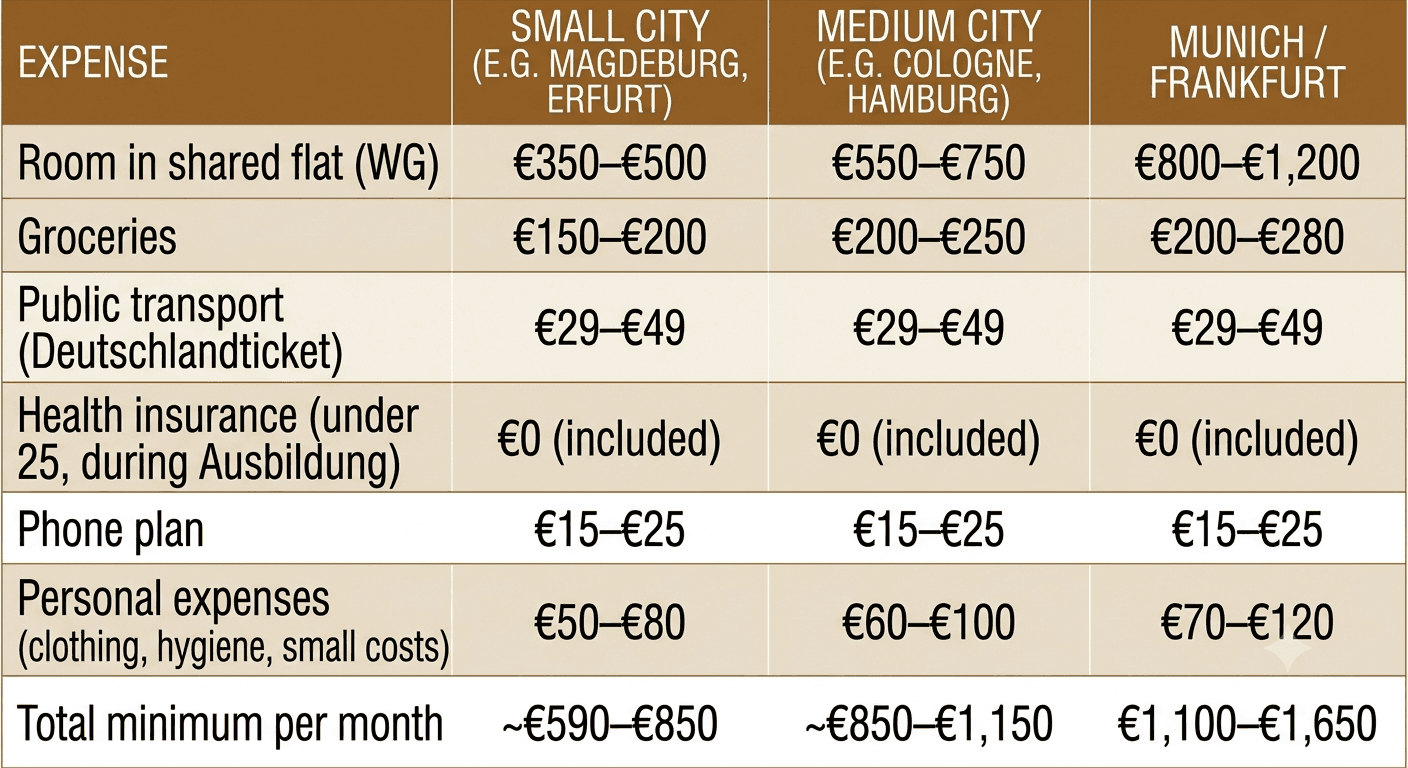
Germany divides clearly into three cost tiers. Small cities in the east and centre are significantly cheaper than Hamburg or Cologne. Munich and Frankfurt sit in a category of their own.
The table below shows minimum realistic monthly costs for a single Ausbildung trainee living in a shared flat (Wohngemeinschaft, or WG). These are not aspirational figures. They are the floor of what a careful budget requires.
Health insurance for Ausbildung trainees under 25 is included in the employer contribution under German statutory health insurance (gesetzliche Krankenversicherung). You pay no separate health insurance premium during your Ausbildung if you are under 25. (Source: GKV-Spitzenverband, 2024)
Ausbildung Salary vs. Living Costs: Which Cities Let You Save
The gap between your Ausbildung stipend and your monthly costs determines whether you can save money, break even, or need financial support from family during training.
In nursing and IT Ausbildung tracks, trainees earn €800 to €1,100 per month in Years 2 and 3. In small German cities, a careful budget allows for modest savings. In Munich or Frankfurt, the same salary may not cover basic costs.
Three cities where the Ausbildung salary-to-cost ratio works in your favour: Magdeburg (Sachsen-Anhalt), Erfurt (Thuringia), and Halle (Sachsen-Anhalt). Room rents average €350 to €450 in these cities. Total monthly costs can stay below €700 for a disciplined spender.
Three cities where costs are manageable but tight: Leipzig, Dresden, and Nuremberg. Rooms average €450 to €600. A salary of €900 per month allows for break-even or small savings.
Cities to approach with financial caution on an Ausbildung salary: Munich, Frankfurt, Stuttgart, and Hamburg. These have the strongest job markets and highest employer stipends, but accommodation costs eat most of the salary advantage.
The Deutschlandticket: One Price for All Public Transport in Germany
The Deutschlandticket costs between €29 and €49 per month and covers unlimited travel on all local and regional public transport across Germany. This includes buses, trams, S-Bahn, and regional trains.
For Sri Lankan candidates moving from Colombo, where public transport options are limited, this is a material quality-of-life improvement. You do not need a car in Germany. You do not need to own one or budget for fuel, insurance, or maintenance.
The Deutschlandticket is not valid on ICE or IC intercity trains, but for daily commuting within a city or region, it covers everything. Many Ausbildung employers also subsidise or cover the cost of the Deutschlandticket as part of the training contract.
At €49 per month, this is one of the most cost-effective transport systems in Europe for urban commuters. (Source: Bundesministerium fur Digitales und Verkehr, 2024)
Health Insurance During Ausbildung in Germany
Health insurance in Germany is mandatory. During your Ausbildung, it is also largely covered for you.
Ausbildung trainees under 25 are insured under the statutory health insurance system (gesetzliche Krankenversicherung, or GKV). The premium is split between you and your employer, and the employee contribution is deducted from your gross stipend. You do not pay a separate bill.
Once you turn 25, or after your Ausbildung ends, you transition to standard employee health insurance under the same GKV system. Contributions are approximately 14.6% of gross salary, split equally between employer and employee. On a salary of €2,500 gross, your employee contribution is approximately €183 per month.
Private health insurance (private Krankenversicherung) is available but not mandatory during Ausbildung and is generally not cost-effective at trainee salary levels.
LKR to EUR: How German Salaries Compare in Sri Lankan Terms
At the exchange rate of approximately LKR 330–350 to €1 (2025–2026 range, based on Central Bank of Sri Lanka data — check current rates at cbsl.gov.lk before financial planning), an Ausbildung stipend of €900 per month converts to approximately LKR 297,000–315,000.
A qualified nurse salary of €3,000 per month converts to approximately LKR 990,000–1,050,000. A mid-level IT professional earning €4,000 converts to approximately LKR 1,320,000–1,400,000 per month.
These figures do not mean Germany is a path to remittance wealth during the Ausbildung years. The cost of living in Germany absorbs most of the stipend. The financial return becomes significant after qualification, when salaries reach €2,500 to €4,000 gross per month.
Sri Lankan candidates should plan their first one to two years in Germany as an investment period, not a savings period. The three-year Ausbildung is a structured pathway to a qualified, well-paid career. The financial upside comes after completion.
One-Time Setup Costs When Moving to Germany
Moving to Germany requires upfront costs that are separate from your ongoing monthly budget. Plan for these before your arrival.
The largest single cost is accommodation. German landlords require a Kaution (security deposit) of two to three months rent. For a room at €500 per month, the deposit is €1,000 to €1,500. You pay this before moving in and receive it back when you leave, provided the room is undamaged.
Add the first month's rent on top of the deposit. For a WG room at €500, your accommodation entry cost is €1,500 to €2,000 paid upfront.
Other one-time setup costs to budget for include: a German SIM card (€10 to €20 to activate), bedding and basic kitchen items if not included in the WG (€150 to €300), a bicycle if your employer or city is not well served by public transport (€100 to €300 used), and a German bank account (most are free — N26, DKB, and Sparkasse all offer free accounts).
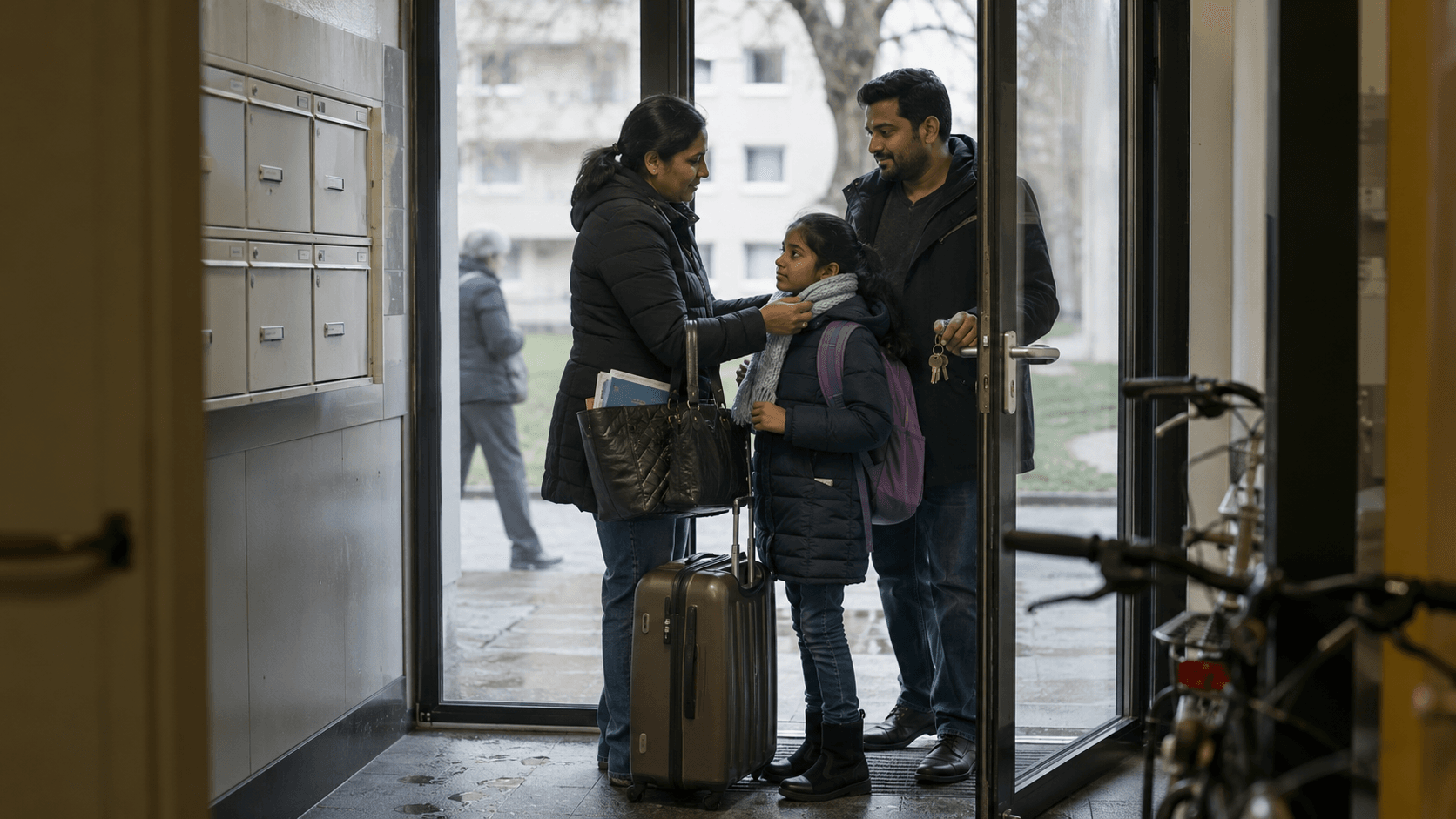
Anmeldung (registering your address at the local Einwohnermeldeamt within two weeks of arrival) is legally required in Germany under Bundesmeldegesetz §17 (2023) and is free. You need a signed rental contract or a Wohnungsgeberbestatigung (landlord confirmation form) to register. This registration document is required for opening a German bank account.
Tips to Reduce Your Cost of Living in Germany
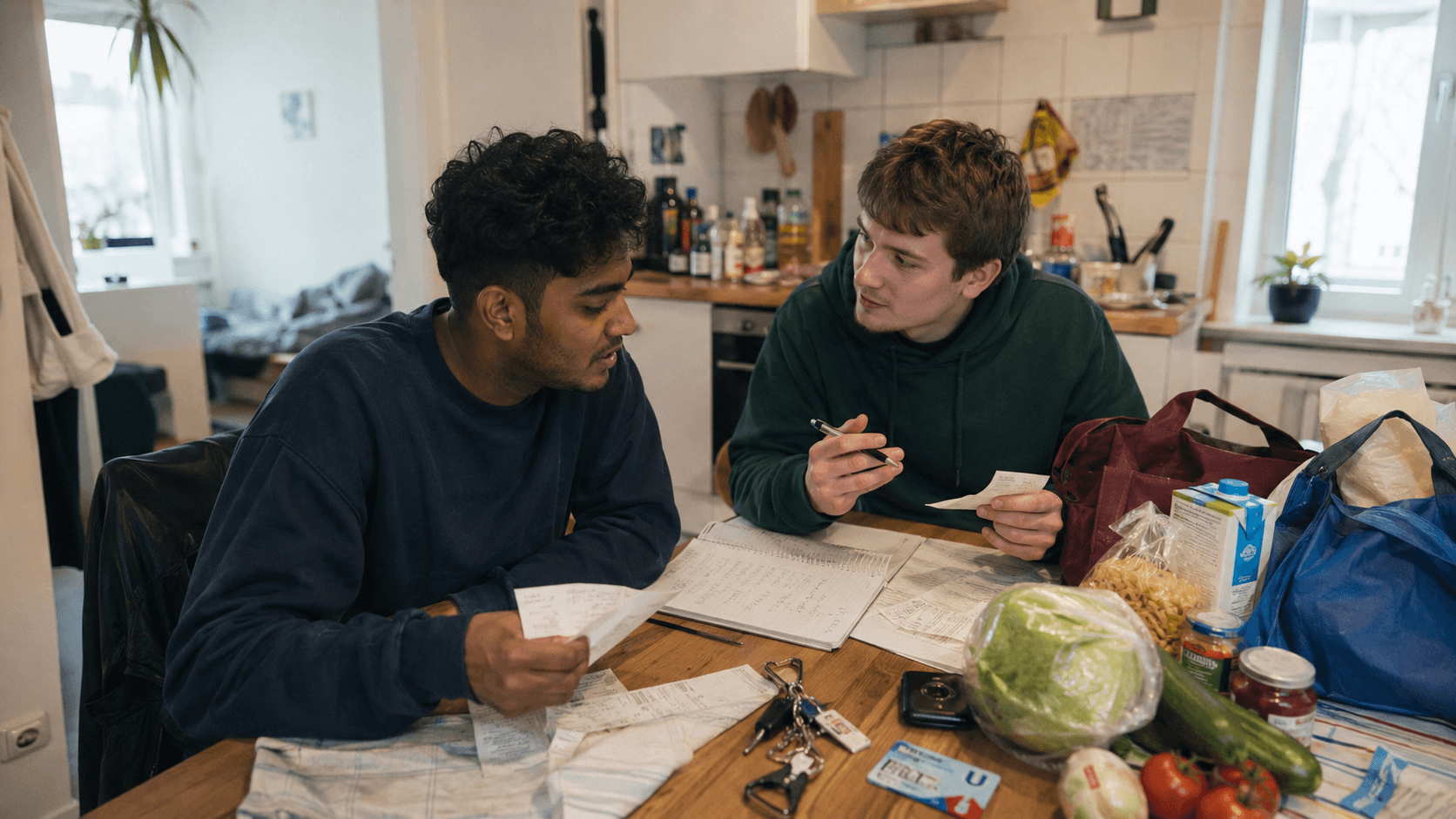
Living in a shared flat (Wohngemeinschaft) is the most effective cost reduction available to Ausbildung trainees. A WG room costs 40 to 60 percent less than a studio apartment in the same city. Most WGs in Germany include a shared kitchen, bathroom, and common areas.
Grocery shopping at Aldi, Lidl, or Penny instead of Rewe or Edeka saves approximately €50 to €80 per month. These discount supermarkets carry the same basic food categories and many branded items at materially lower prices.
The Mensa (university student canteen) offers subsidised meals at €2 to €5. As an Ausbildung trainee, you may have access to your employer's canteen (Betriebskantine) at similar prices. Cooking at home three to four nights per week and using canteen meals for lunch is a realistic cost-control strategy.
Secondhand platforms such as eBay Kleinanzeigen are widely used in Germany for furniture, electronics, and clothing. Setting up a room using secondhand items costs a fraction of buying new.
Written by
Randima Saiger
Co-founder, MALIROSA
Randima Saiger is a co-founder of MALIROSA from Sri Lanka. She brings deep personal understanding of the Sri Lankan education system, family dynamics, and candidate aspirations, bridging local knowledge with Germany-side experience.
Yes, but the answer depends on the city and your salary level. In smaller German cities such as Magdeburg, Erfurt, or Halle, an Ausbildung stipend of €800 to €1,000 per month covers accommodation in a shared flat, food, and transport with little to spare. In cities such as Munich or Frankfurt, the same salary does not cover costs comfortably. Trainees in high-cost cities often rely on family support during training years. Nursing and IT Ausbildung tracks, which pay €900 to €1,100 per month, offer the most viable salary-to-cost ratio across most German cities. (Source: Bundesagentur fur Arbeit, Numbeo, 2024)
How much does rent cost in Germany?
A room in a shared flat (Wohngemeinschaft or WG) in a small German city costs €350 to €500 per month. In medium-sized cities such as Cologne and Hamburg, expect €550 to €750. In Munich and Frankfurt, room rents range from €800 to €1,200 per month. Studio apartments cost significantly more — typically 40 to 60 percent above WG room prices in the same city. Renting a room in a shared flat is the standard and most cost-effective approach for Ausbildung trainees. (Source: Destatis, Numbeo, 2025)
What is the cheapest city to live in Germany?
The cheapest German cities for accommodation are generally in the eastern states: Magdeburg (Sachsen-Anhalt), Halle (Sachsen-Anhalt), Erfurt (Thuringia), and Chemnitz (Saxony) consistently appear at the bottom of German rental cost rankings. Room rents in these cities average €300 to €500 per month. These cities also have active Ausbildung markets in healthcare, IT, and trades, making them viable for Sri Lankan candidates who want to minimise living costs while training. Smaller cities also tend to have shorter commutes and lower transport costs within the city. (Source: Destatis rental index, 2024)
Do Ausbildung trainees get free health insurance in Germany?
Ausbildung trainees under 25 have their health insurance contribution included in the employer contribution under Germany's statutory health insurance (GKV) system. You pay an employee share deducted from your gross stipend — approximately 7.3% of your gross salary — but no separate monthly premium bill. The employer pays the matching 7.3%. On a stipend of €900 per month, your health insurance deduction is approximately €66 per month. After turning 25 or after completing your Ausbildung, you pay standard employee GKV contributions. (Source: GKV-Spitzenverband, 2024)
How much money should I bring when moving to Germany?
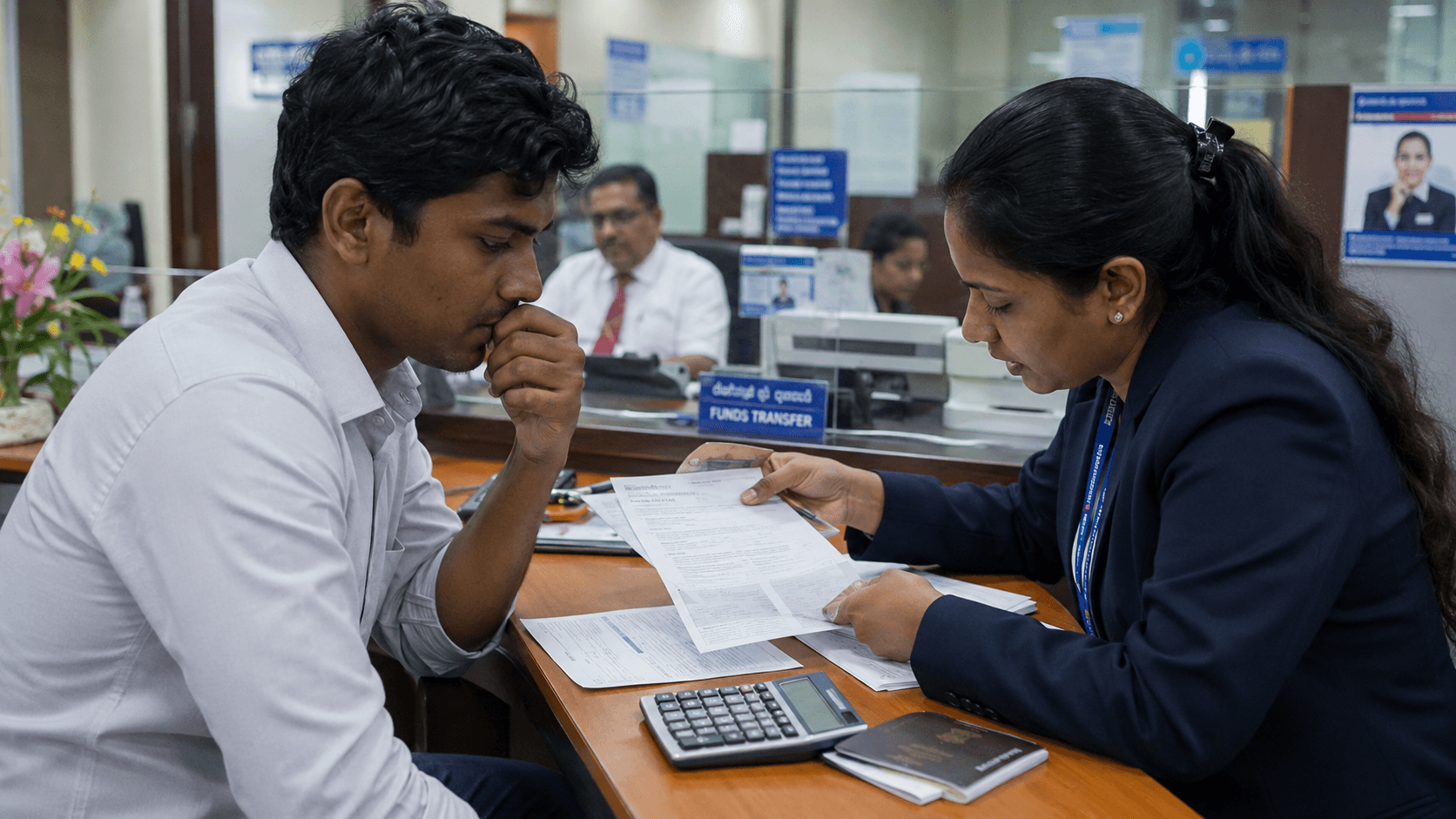
Sri Lankan candidates moving to Germany for Ausbildung should plan to bring the equivalent of €3,000 to €4,000 to cover setup costs. This includes the Kaution (security deposit of 2 to 3 months rent, typically €700 to €1,500), first month's rent, initial grocery shopping, phone SIM, and basic household items. If you are applying for a German student or Ausbildung visa, a blocked account (Sperrkonto) of €11,208 (Source: §2(3) AufenthG — verify current figure at auswaertiges-amt.de as this is updated annually) is required separately and is not accessible for day-to-day spending. Your savings above the blocked account amount are what you will use for initial setup.
Want to understand exactly how your finances will look before you move?
MALIROSA's free consultation includes a financial readiness assessment for your specific Ausbildung pathway. We review your target city, expected salary, and setup costs so you enter the process with a clear picture of what to prepare.
Germany Blocked Account (Sperrkonto) Guide for Sri Lankans: 2026 Amounts, Providers & Steps
The German embassy will not issue your student visa or Chancenkarte without a blocked account (Sperrkonto). In 2026 that is €11,904 for students and €13,092 for the Chancenkarte. This guide covers which provider to use, exactly how to open one from Sri Lanka, and the mistakes that cause appointment delays.
Two Worlds, One Purpose: The Story Behind MALIROSA
MALIROSA grew from a decade of living the exact journey that our candidates are about to begin: between Sri Lanka and Germany, between two cultures, two languages, and two very different sets of expectations.
5 min read
Visa & Pathways
Family Reunion Visa Germany: Who Can Apply, What Is Required, and How Long It Takes
Germany granted over 100,000 family reunion visas in 2023. Most applicants wait between three and twelve months for an appointment at the German Embassy. Understanding the requirements before you apply can cut that wait significantly.
9 min read
Ausbildung
How to Find an Ausbildung Employer in Germany from Sri Lanka (2026 Guide)
You cannot show up in Germany and then find an Ausbildung employer. You need a signed training contract before your visa is approved. This guide covers every active portal, how to write applications German employers actually read, and the realistic timeline from first search to visa approval.